Grain doesn’t always require supplemental heat to reach a suitable moisture level for storage. Under the right conditions, unheated outdoor air can gradually remove moisture as it moves through grain in a bin.
The effectiveness of natural air drying depends mainly on the grain’s initial moisture content, the airflow rate through the grain, and the temperature and relative humidity of the drying air.
Understanding how these factors work together helps producers determine whether natural air drying is suitable for their crop and bin, and recognize when another drying method may be needed.
How does natural air grain drying work?
Natural air drying uses a fan to move unheated outdoor air through stored grain. In a typical system, air enters through a perforated floor, moves upward through the grain, and exits through roof vents.
As the air passes through the grain, it picks up moisture from the kernels and carries it out of the bin. Over time, this lowers the grain’s moisture content.
What determines how well natural air drying works?
The amount of moisture in the grain, airflow through the bin, and air conditions each play a role in how quickly grain dries and whether it can reach its storage target.
Starting moisture determines how much drying is needed
Grain with higher starting moisture requires more water removal to reach its storage target. For example, corn entering the bin at 18% moisture needs more drying than corn entering at 16%, assuming the same target moisture level.
Higher-moisture grain also has a greater risk of spoilage, leaving less time to complete drying. Measuring moisture before filling the bin helps producers determine how much drying is needed and whether the available airflow can remove that moisture in time.
Airflow determines how quickly grain can dry
Airflow controls how much air moves through the grain to carry moisture away. Higher airflow generally speeds up drying, while insufficient airflow can leave grain wet for too long.
Airflow is measured in cubic feet per minute per bushel (CFM per bushel). Actual airflow depends on fan performance and resistance through the grain, so fan horsepower alone doesn’t indicate how much air reaches the kernels.
If airflow is too low, drying may take too long, even when outdoor conditions are suitable. At 1.0 CFM per bushel, corn and soybeans may take about 45 to 50 days to dry, depending on starting moisture and weather conditions.
Matching starting moisture to airflow
The table below shows maximum starting moisture levels for different crops at specified airflow rates under the stated conditions.
Crop | Airflow (CFM per bushel) | Maximum starting moisture |
Corn (northern states) | 1.0 | 22% |
Corn (northern states) | 1.25 | 23% |
Corn (southern states) | 1.0 | 21% |
Corn (southern states) | 1.25 | 21.5% |
Soybeans | 1.0 | 16% |
Soybeans | 1.5 | 18% |
Wheat (spring drying) | 0.75 | 17% |
“Maximum starting moisture” refers to the highest moisture content at which grain can enter the bin and be dried with natural air before spoilage under the stated conditions. These values are starting limits, not safe storage targets. Corn is typically dried to 13% to 15% moisture for storage.
For this table, “northern states” refers to northern Minnesota, North Dakota, and South Dakota; “southern states” refers to southern Minnesota, Iowa, and Wisconsin. Corn values assume a bin filled within one or two days in mid-October, while wheat values reflect spring drying.
Air conditions determine how dry grain can get
Outdoor temperature and relative humidity affect the drying potential of incoming air. Air with lower relative humidity generally removes moisture more effectively than humid air.
Grain eventually reaches an equilibrium moisture content, where it neither gains nor loses moisture under the surrounding air conditions. If this level is above the storage target, natural air alone cannot dry the grain sufficiently.
How to manage grain during natural air drying
Because moisture levels and outdoor conditions change throughout drying, regular monitoring helps producers determine whether the process is progressing as expected.
- Track drying progress: Check grain moisture at different depths to see how drying advances through the bin. The top layer typically dries last, making its moisture level particularly important.
- Monitor grain temperature: Watch for unusual warming that could indicate heating or spoilage, particularly in areas where grain moisture remains high.
- Watch outdoor conditions: Monitor temperature and relative humidity to assess whether incoming air continues to support drying.
- Adjust when needed: If moisture isn’t decreasing as expected, reassess fan operation and whether natural air drying remains suitable.
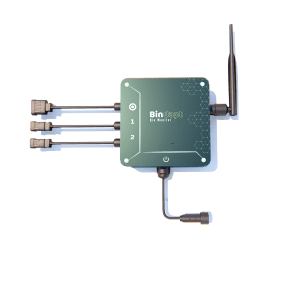
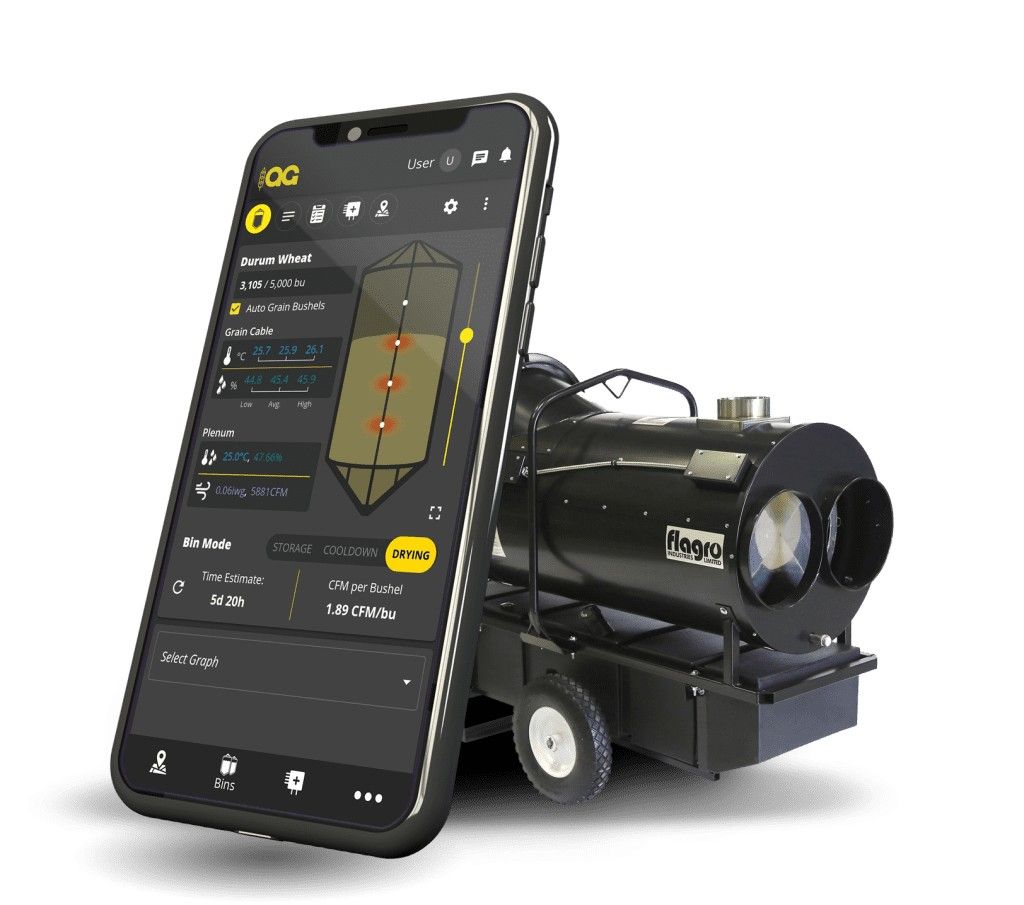
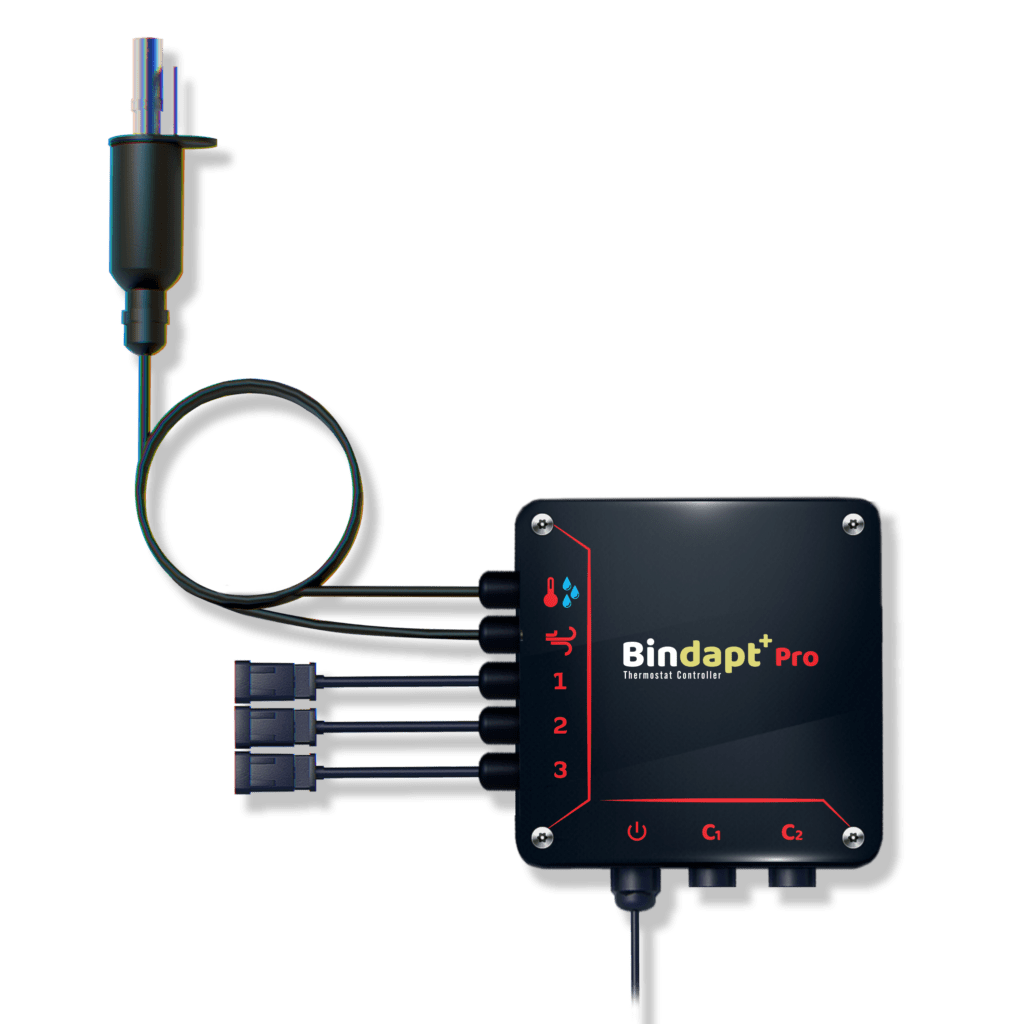
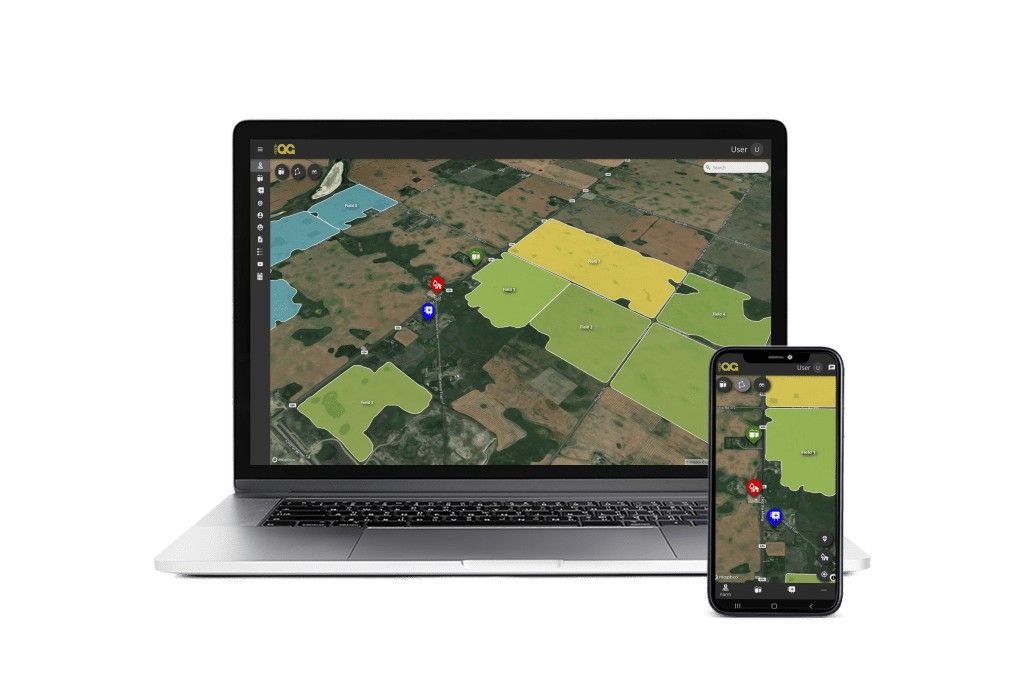
Adaptive Agriculture’s V2 Bindapt+ 2.0 Monitor allows producers to remotely track grain temperature, moisture, and environmental conditions to monitor drying progress and identify potential issues early.
When is natural air drying not enough?
Natural air drying may not be sufficient when grain starts too wet for the available airflow, outdoor conditions limit moisture removal, or drying takes too long and risks spoilage.
In these situations, supplemental heat may be needed. Heating incoming air increases its moisture-removal potential, helping grain dry when unheated outdoor air alone cannot meet the storage target. However, adequate airflow remains essential, even with supplemental heat.
Conclusion
Natural air drying can effectively reduce grain moisture when starting moisture, airflow, and weather conditions are suitable. Understanding these factors, along with monitoring grain throughout the process, helps producers determine whether drying is on track and when a different approach may be needed.
For grain drying and storage, the right equipment can help producers manage changing conditions throughout the process. Contact us to explore grain monitoring, aeration, and conditioning solutions for your operation.
Frequently asked questions