US Flag

Advanced Grain Dryer Systems

Mimic the PERFECT Drying Conditions by Adapting A
Construction Heater to your Bin!

Automate your In-Bin Grain Drying System with

Smart Device Automation

Construction Heater Integration

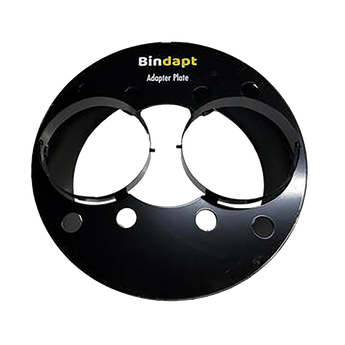
Patented Adapter Plates

Adequate Airflow with Reliable Grain Dryer Fans

How In-Bin Drying Works

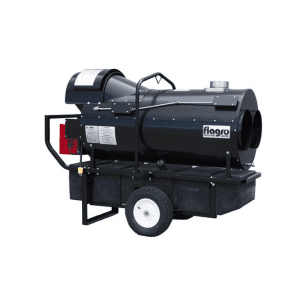
Create Ideal Drying Conditions Using Your Flagro, Ignite, Herman Nelson, or Frost Fighter Heater

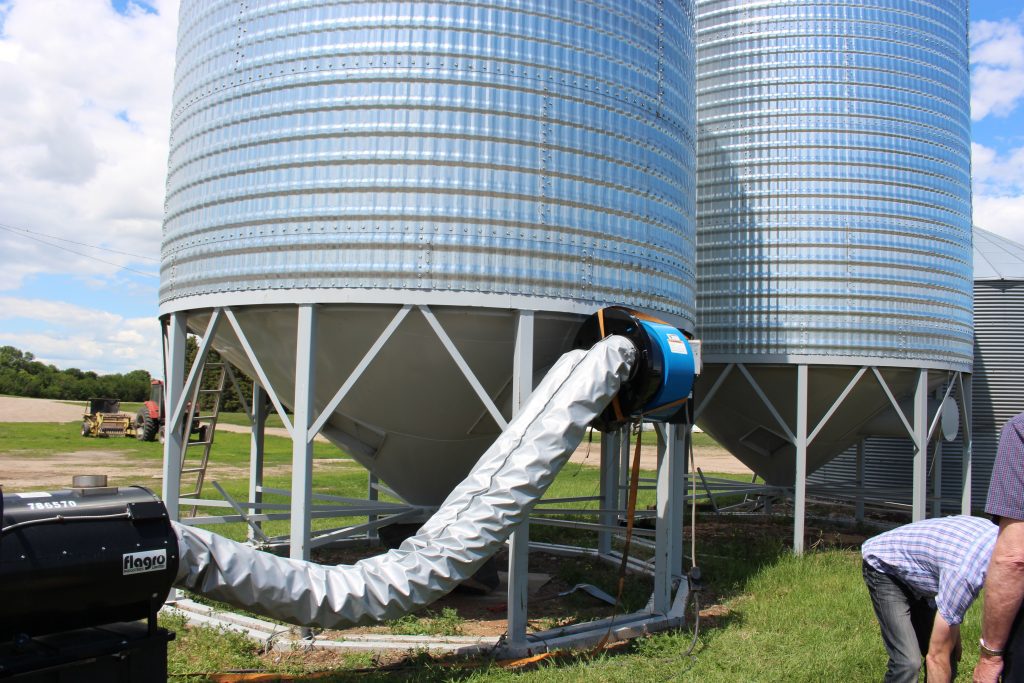
When you connect an indirect fired construction heater to your aeration system using our patented adapter plates, your entire grain bin becomes an affordable, efficient grain drying system. This setup gives farmers a cost-effective alternative to a traditional commercial grain dryer, without sacrificing performance. Whether you’re searching for grain dryer fans for sale, looking to upgrade to smart grain dryer controllers, or exploring the best grain dryer for a small farm, our system scales easily for both small and large operations.

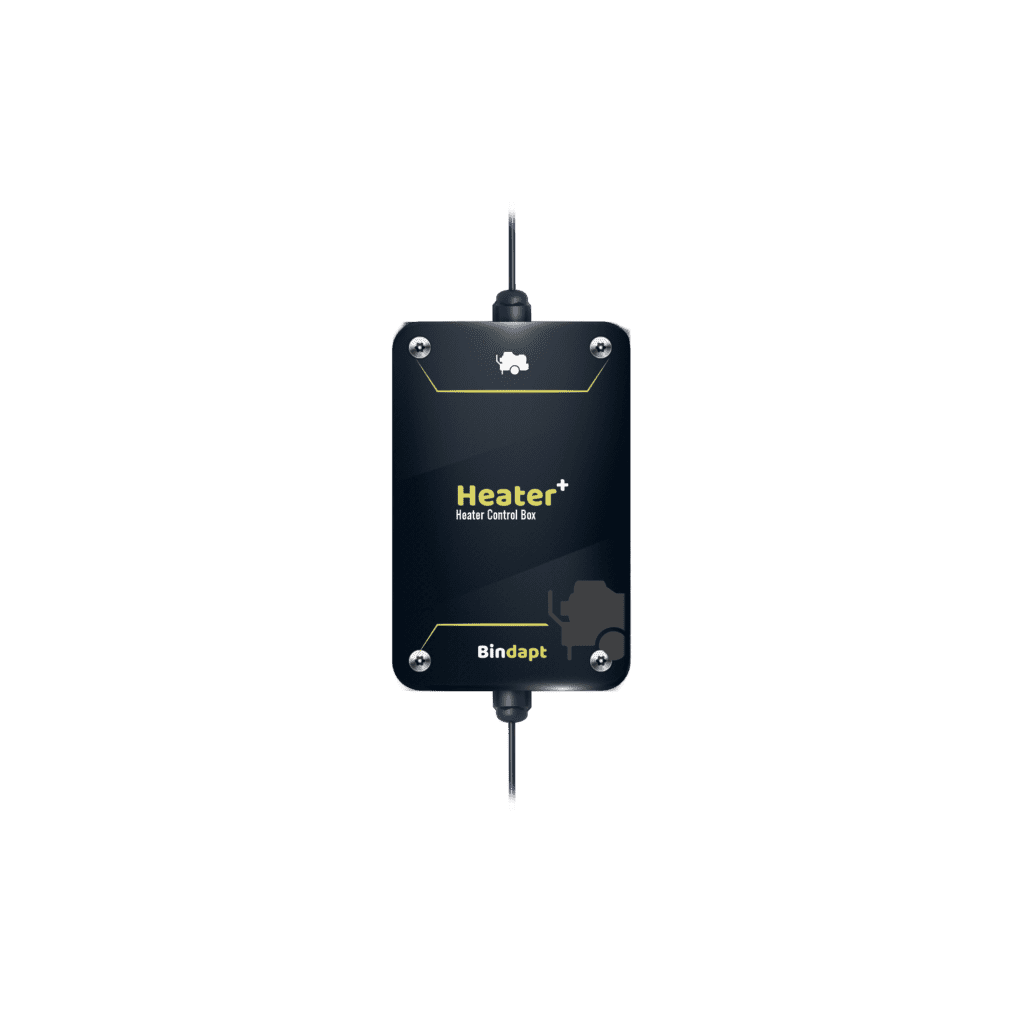
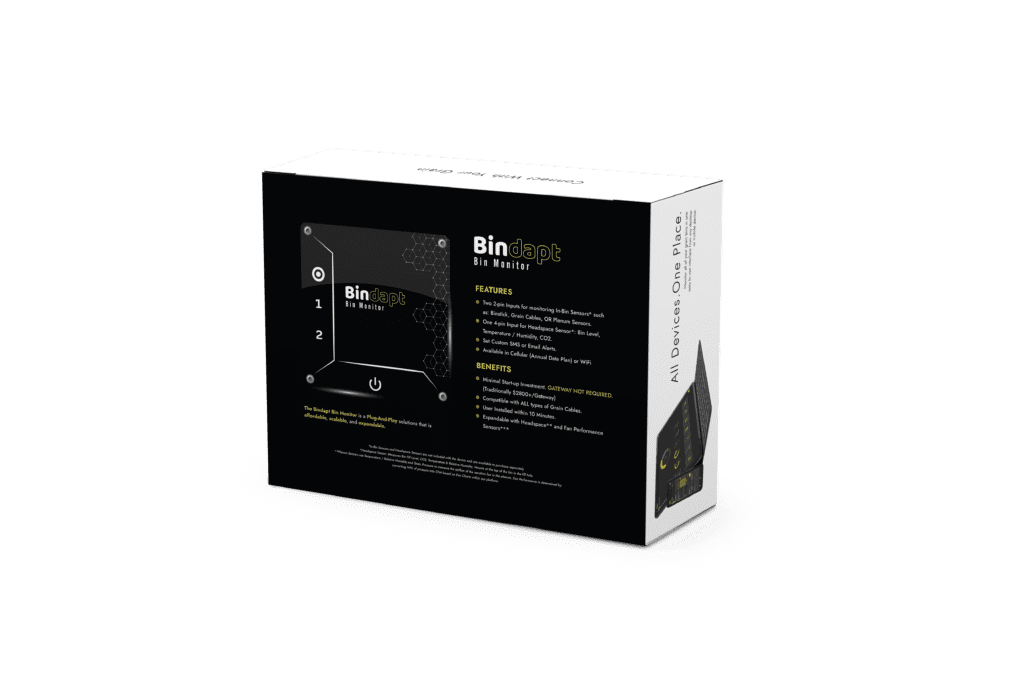
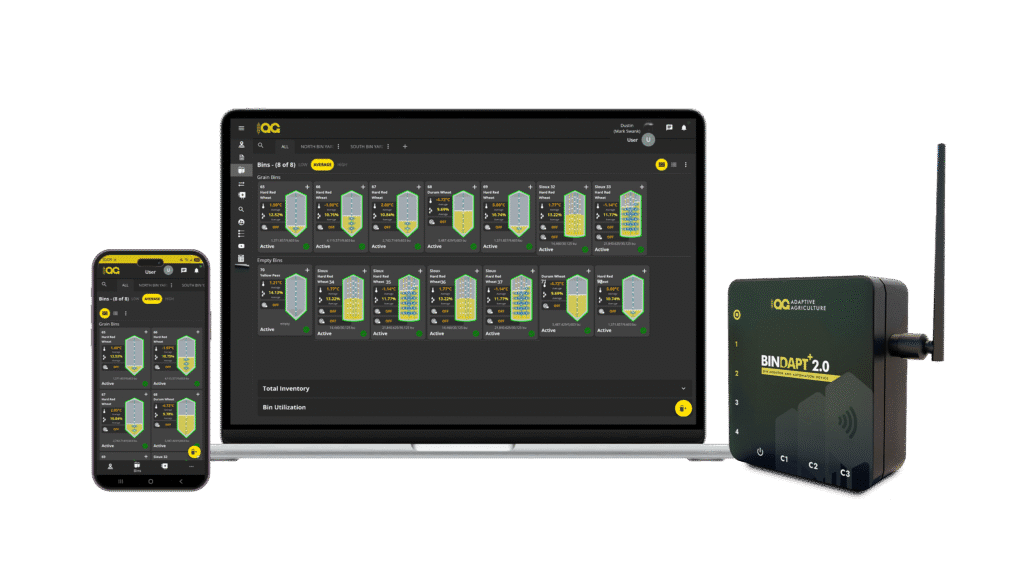
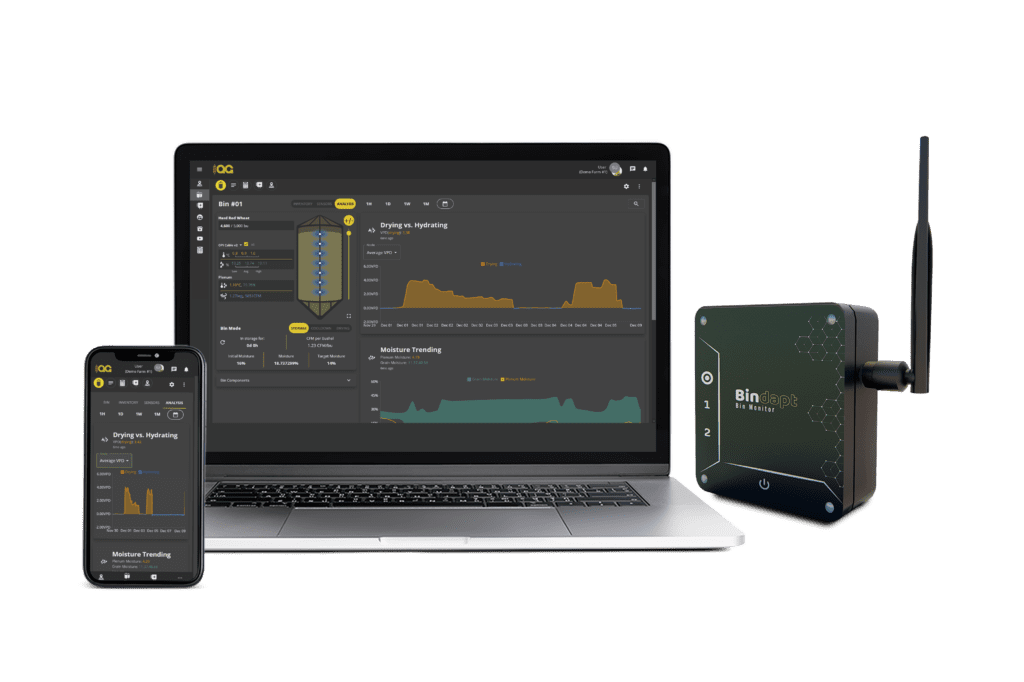
Our Bindapt+ 2.0 Automate system regulates the heat entering the bin and continuously collects real-time drying data through our mobile and web platform.

In-Bin Drying Gallery

In Bin Drying Picture 3 Bindapt Adaptive Agriculture

In-Bin Drying Steps

Begin Process Ensuring 1 CFM/bu

Heat and Push Moisture Front to Top

Run Cool-Down Cycle for 24-48 hours

Take Sample & Repeat if Needed

Begin the Drying Process with Bindapt+ 2.0 Automation

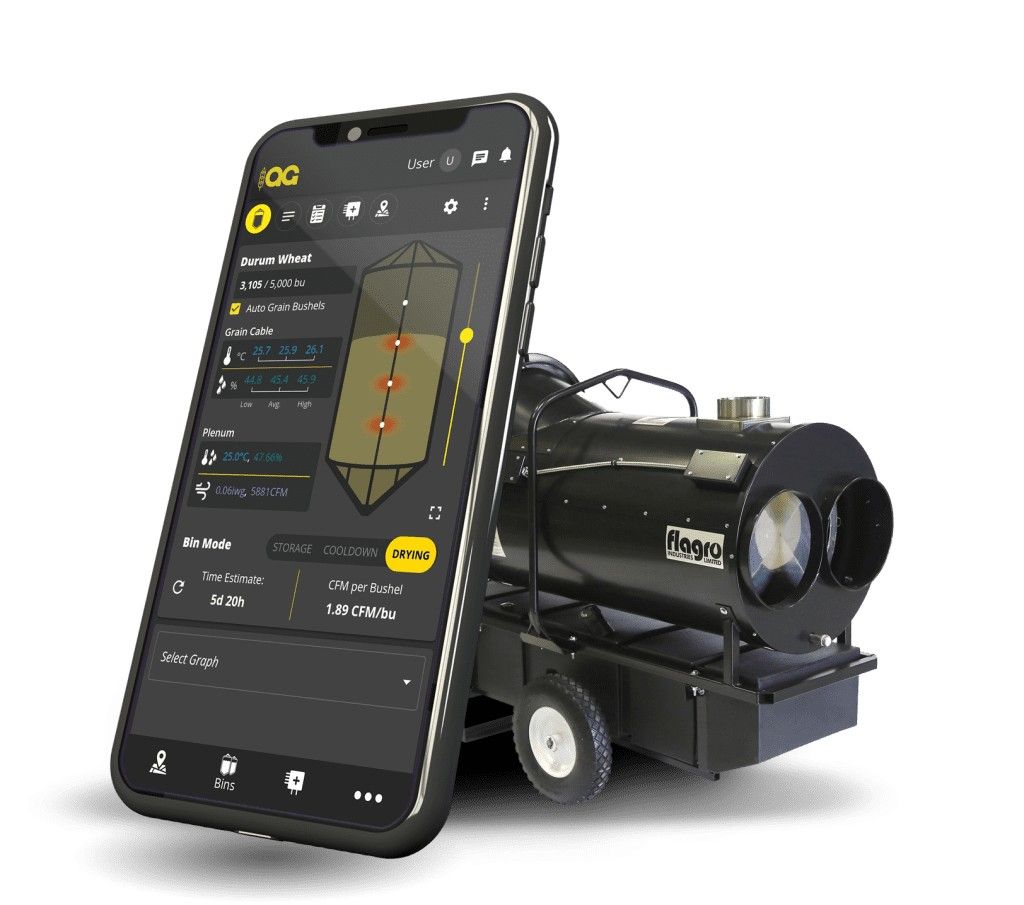
Bindapt+ 2.0 Device with Mobile App Mock
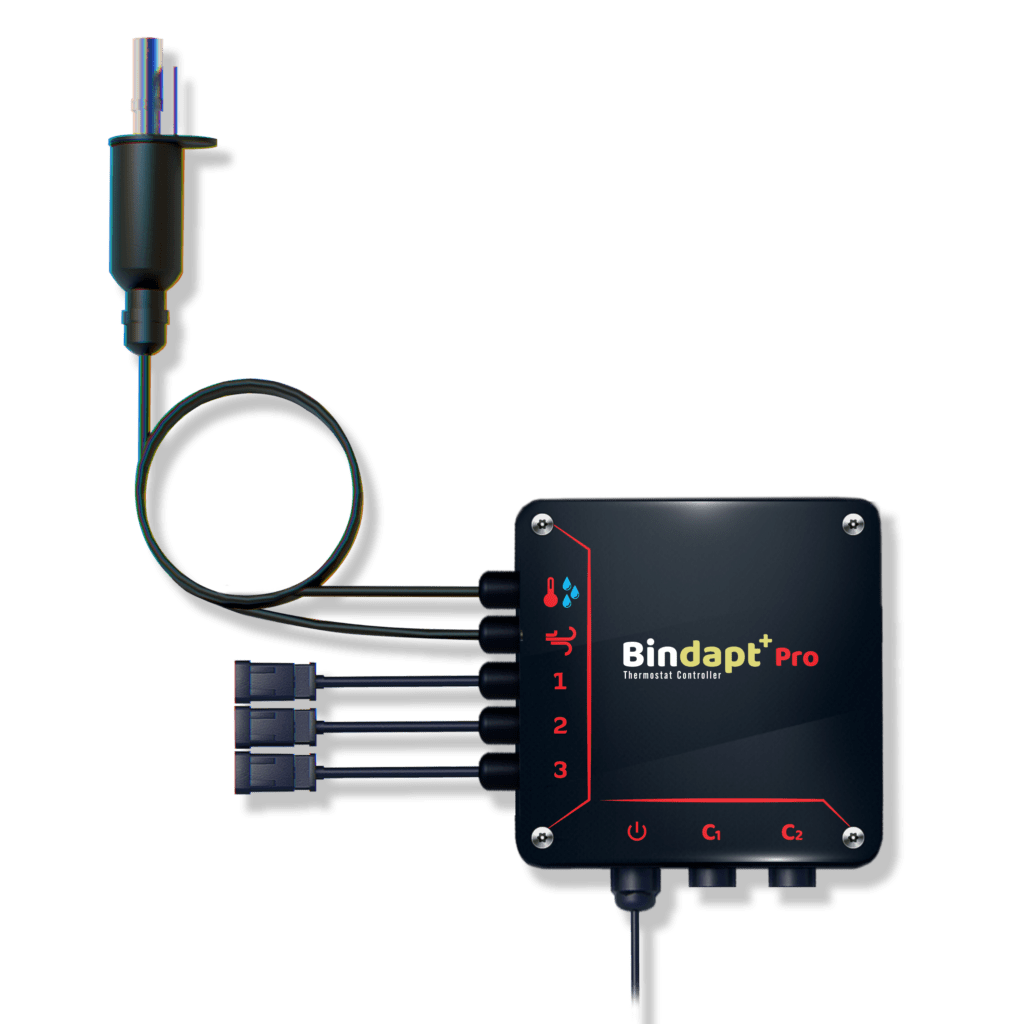
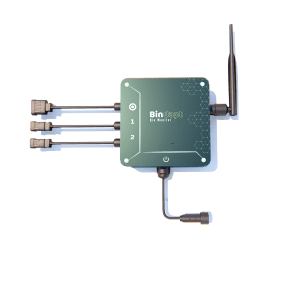
Our Bindapt+ 2.0 Automate device, paired with a modular plenum sensor that measures temperature, humidity, and static pressure, creates the ideal controlled environment needed for safe, effective in-bin drying. These data points are essential to running a high-performing grain dryer system.Here’s what Bindapt+ 2.0 monitor can manage for you:
  • Temperature & Humidity Control: Used to regulate supplemental heat entering the bin to ensure safe drying conditions.
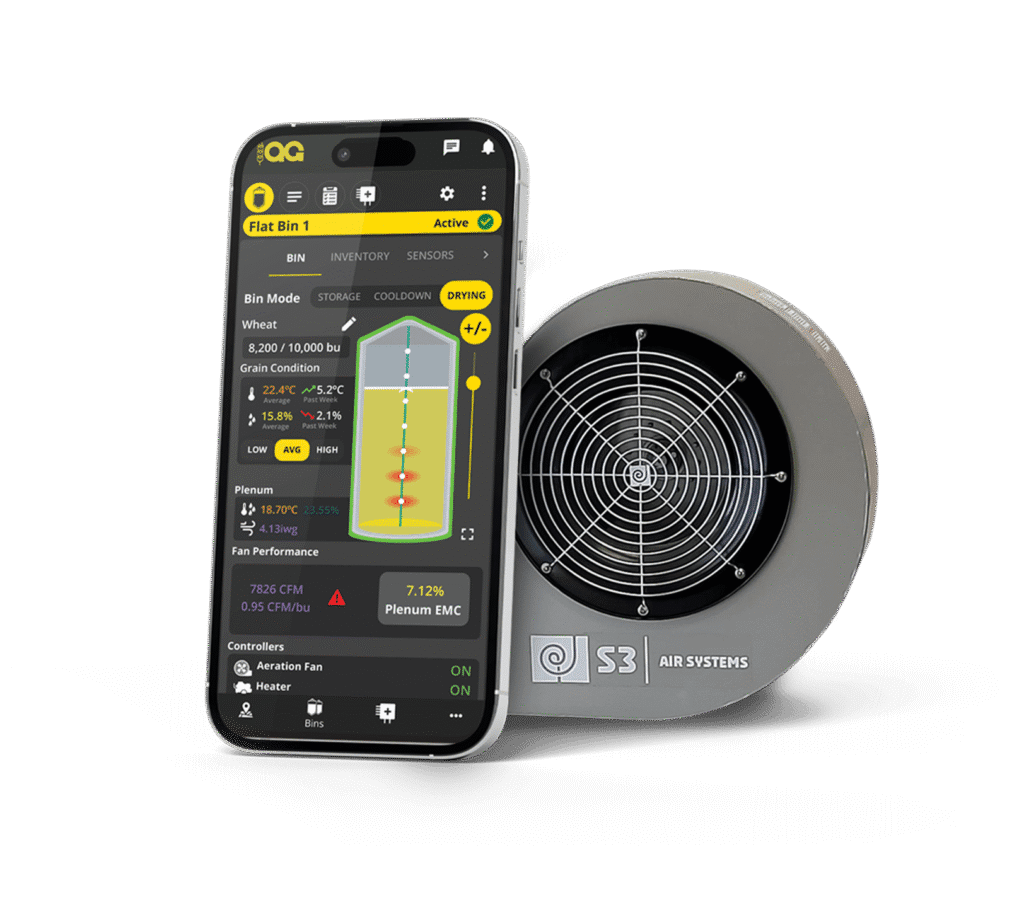
  • Static-Pressure-to-CFM Conversion: Static pressure is automatically compared to your fan chart to convert IWG readings into CFM (Cubic Feet per Minute). We then divide CFM by your total bushels to calculate CFM/bu, giving you a real-time airflow understanding. For effective in-bin drying requires 1 CFM per bushel of grain.This airflow requirement applies whether you’re using a compact system for small farms or a full commercial grain drying setup.

Do you have enough Airflow?

Many farmers believe 1 HP per 1,000 bushels is enough for drying. However, this does not apply to heated in-bin drying.
Grain bin fan control on mobile app with S3 air system fan

You need 1 CFM per bushel to dry grain effectively.

If airflow is insufficient, moisture cannot move through the entire grain column, and grain must be removed.

Grain bin fan control on mobile app with S3 air system fan

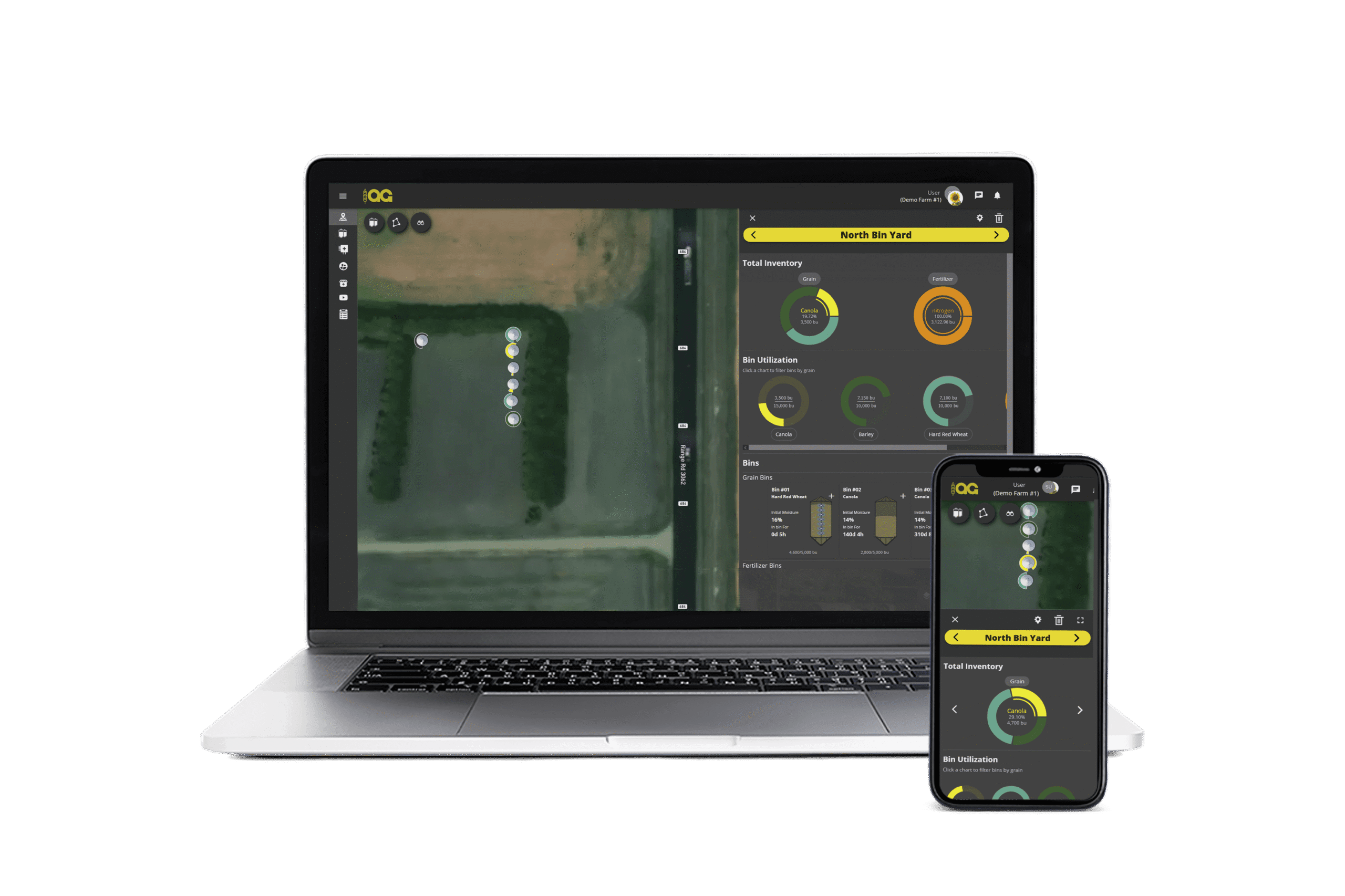
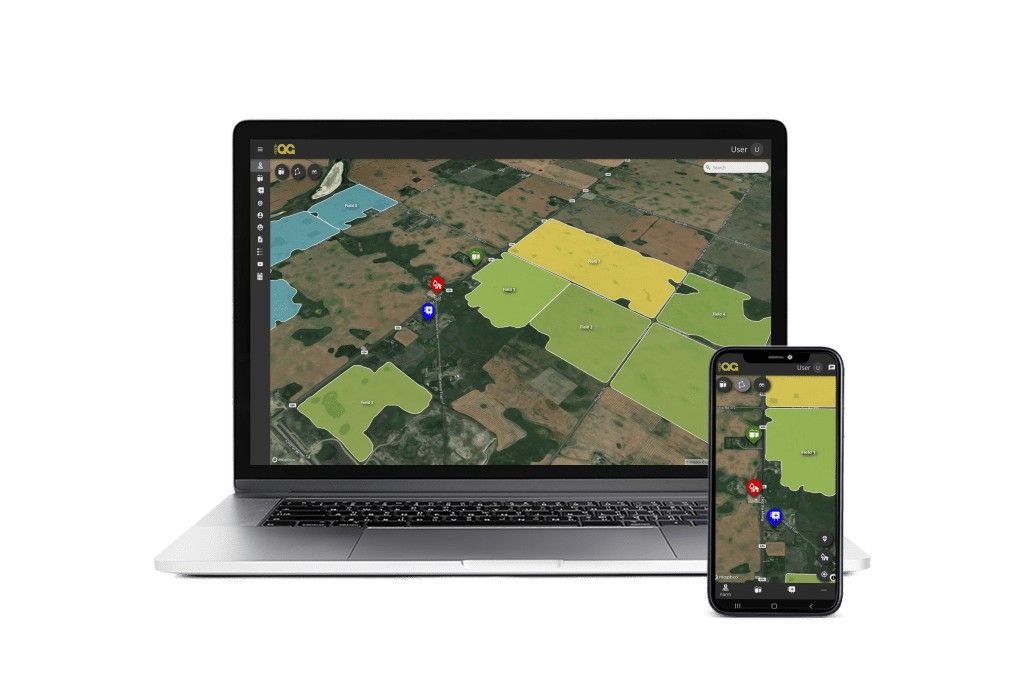
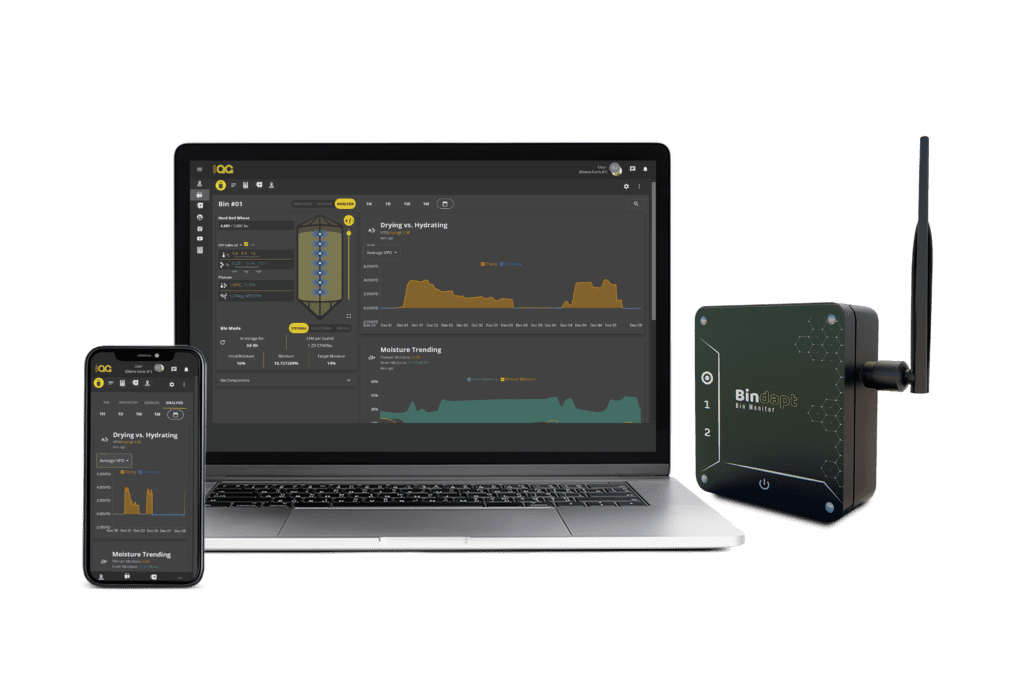
The Visual Farm Platform to Monitor the Drying Process

Your entire drying process is analyzed in real time.

By combining plenum sensor data with in-bin cable readings, the platform shows:
  • Whether the bin is drying or hydrating
  • How effectively the moisture front is moving
  • Estimated time to completion
  • Flagged issues like insufficient airflow or temperature drift
  • Data-driven insights from your grain dryer controllers
Once a drying event begins, your aeration fan must run continuously to push the moisture front upward. Without 1 CFM/bu, you simply won’t be able to move the moisture front completely and will be required to remove grain.
Bindapt grain bin monitoring dashboard on devices

Cool-Down Process by Running the Cycle for 24–48 Hours

Bin Page Connected Analysis Mockup
After your grain has been heated throughout the bin and drying has completed, switch from “Drying” to “Cool-Down.” Running your aeration fan for 24–48 hours removes heat while keeping EMC stable.Once all cable nodes show a safe storage temperature, you can:
  • Turn off aeration
  • Allow the bin to rest for 24 hours
  • Take accurate moisture readings

Sample and Evaulate

Evaluate Your Results!

Take a few grain samples from the bin and review the moisture results. In-bin drying involves many variables, but with the right airflow and temperature control, you can reliably bring moisture levels down. You can record each test in the “Notes” section for that bin.

Your entire in-bin drying setup can also be moved easily from one bin to another, eliminating the need to haul grain to a separate dryer.

2.3 Bin Page Connected

Get Started with Adaptive Agriculture

Looking to upgrade your system or buy grain dryers for sale? Adaptive Agriculture helps farmers buy grain dryer solutions that integrate seamlessly with existing bins—no costly retrofits required.
 
Our technology bridges the gap between efficiency and affordability, helping you maintain perfect drying conditions with ease. Contact us today to learn more about our solutions and see why farmers consider us the best grain dryer choice for adaptable, sustainable, and smart operations.

In-Bin Drying Products

  • Flagro FVO

    Flagro FVO-400

    Read more
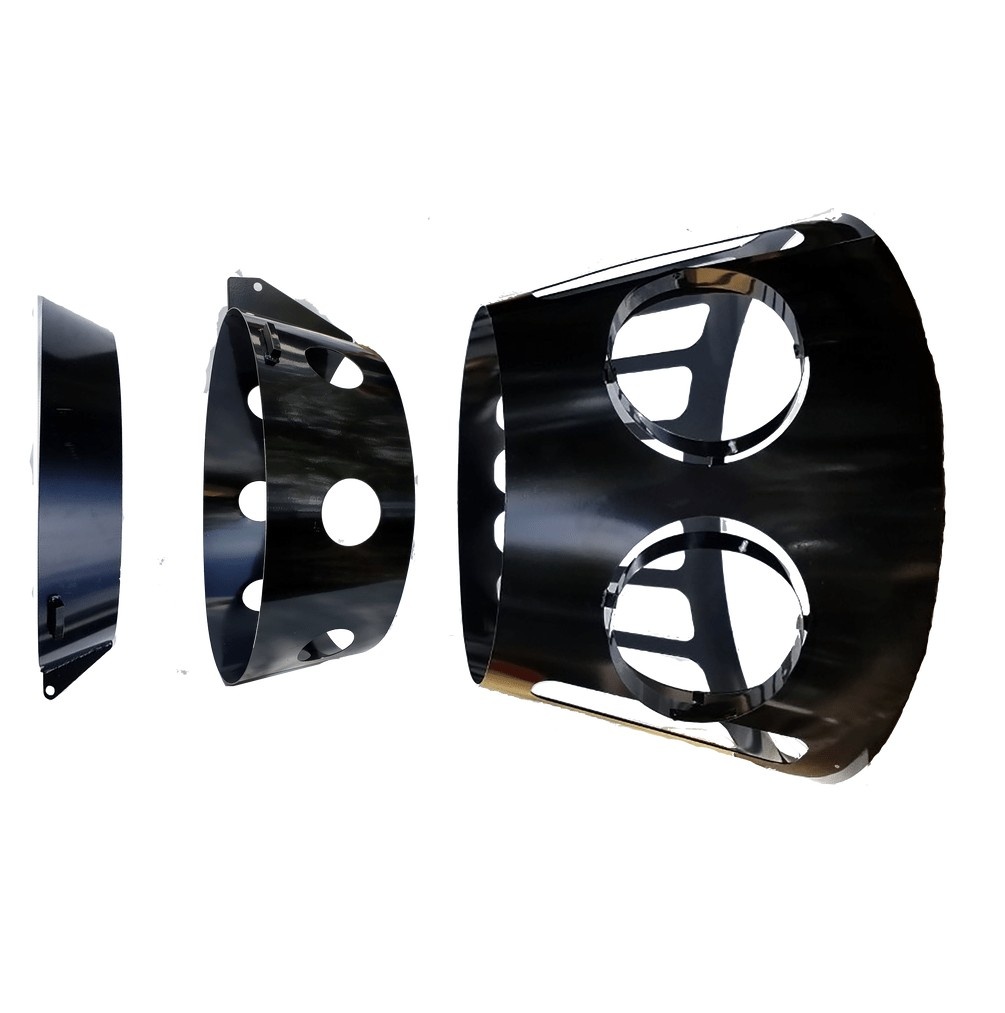
  • Adaptive Heater Ducting

    Heater Ducting

    Price range: $195.00 through $328.00
    Select options This product has multiple variants. The options may be chosen on the product page
  • S3 Aeration Fan

    Full Centrifugal Aeration Fan

    Read more
  • Aeration Transitions

    Aeration Transitions

    Price range: $150.00 through $950.00
    Select options This product has multiple variants. The options may be chosen on the product page
  • Bindapt Adapter Plate

    Adapter Plates

    $550.00
    Add to cart

Frequently asked questions

What airflow requirement should I meet for in-bin drying?

A minimum of 1 CFM per bushel is required. Anything less will stall the moisture front.

Does this system work for small farms?

Absolutely. Many small farms prefer this method as it delivers the best grain dryer for small farm setups without major equipment costs.

What does the Bindapt+ 2.0 Automate control?

It works as a smart grain dryer controller, regulating heat, monitoring airflow, collecting data, and automating the entire drying process.

Can the system be used across multiple bins?

Yes. All components can be moved to other bins easily, making it a flexible and cost-effective grain dryer system.

Fill Out Form Below for a Quote!

Adaptive Agriculture Website Logo Black Text