When grain is loaded into a bin from the center, it typically forms a peak rather than settling into a flat, even surface. Although this is a normal result of the filling process, the shape of the grain mass can influence how effectively air moves through the bin during storage.
This can make some areas harder to aerate than others, potentially leading to uneven temperatures and moisture conditions within the grain mass. Understanding the challenges created by a peaked surface can help farmers manage aeration more effectively and maintain better storage conditions.
Why does grain form a peak in a storage bin?
As grain enters through the top center of the bin, it piles up beneath the opening and spreads outward, creating a cone-shaped surface. Unless the grain is leveled or redistributed, this peak remains after filling.
The steepness and shape of the peak depend on several factors, including grain type, moisture content, kernel size and shape, and the amount of fines or broken kernels present.
How does peaked grain affect airflow and aeration?
Grain distribution within the bin can affect how air moves through the grain mass and how effectively the aeration system operates.
What happens to airflow when grain is peaked?
A peaked grain surface creates uneven resistance to airflow across the bin. Grain is deepest at the center of the peak, so air moving upward through this area must travel through more grain before reaching the surface. The greater the grain depth, the greater the resistance to airflow.
The filling process can make this resistance even greater. As grain flows into the bin, larger kernels tend to roll toward the outside, while fines, broken kernels, and other small particles tend to concentrate near the center. These smaller particles reduce the open space between kernels, creating a denser core that air has a harder time moving through.
How does peaked grain affect the aeration system?
Peaked grain can reduce the effectiveness of the aeration system. Because air naturally follows the path of least resistance, more airflow tends to pass through the shallower, less dense grain toward the outside of the bin.
As a result, the outer grain can cool more quickly while the center remains warm. Grain bin aeration fans may need to operate longer to bring the entire grain mass to the desired temperature, increasing energy use and operating costs.
What problems can uneven airflow cause?
Uneven airflow can affect stored grain in several ways:
- Hot spots can develop: Areas with limited airflow may retain heat and require closer monitoring.
- Moisture differences can persist: Areas receiving less airflow may remain wetter, particularly when the system is being used for drying.
- Spoilage can become localized: Warm or damp pockets can support grain deterioration, even when conditions elsewhere in the bin appear satisfactory.
- Grain quality can vary: Differences in temperature and moisture can lead to inconsistent quality across the stored grain.
Ways to reduce the effects of peaked grain
Reducing the effects of peaked grain begins with managing the grain surface and fines that develop during filling. The following practices can improve airflow through the grain mass.
Core the bin to remove concentrated fines
Withdrawing grain from the center of the bin after filling provides two benefits: It removes fines and broken kernels that tend to accumulate there while also lowering the height of the center peak. This practice, known as coring, helps reduce both grain depth and airflow resistance at the center of the bin.
Level the grain surface after filling
Leveling the grain creates a more consistent grain depth from the center of the bin to the outer edges. This helps air move more evenly through the grain and can improve the consistency of cooling or drying. Leveling does not, however, remove fines; it can simply spread concentrated fines over a wider area.
How bin monitoring helps you catch airflow problems early
Bin monitoring helps you see what’s happening inside the grain and identify areas that may not be receiving enough airflow.
Monitoring can help you track:
- Temperature to identify hot spots and temperature changes within the grain
- Moisture to see whether grain is drying or conditioning evenly
- CO₂ levels to detect increased biological activity
- Plenum conditions to understand the air entering the grain
This is especially useful in a peaked bin, where differences in grain depth can create uneven airflow resistance and grain conditions.
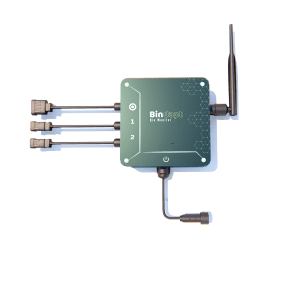
Modern bin monitoring solutions like Adaptive Agriculture’s V2 Bindapt+ 2.0 provide a more complete view by bringing bin data together in one dashboard, with alerts to keep you informed when conditions change.
Final thoughts
Peaked grain can make it harder for air to move evenly through the bin. Greater grain depth and concentrated fines near the center can restrict airflow, leaving some areas warmer or wetter than others. Fortunately, these challenges can be managed with the right practices.
Coring or leveling the grain can improve airflow, but ongoing monitoring is still important. For grain monitoring and conditioning solutions that provide greater visibility into your bins, contact us to learn more.
Frequently asked questions