A small pocket of deteriorating grain can become a larger storage problem if left unchecked. As conditions worsen, more of the grain mass may be affected, making it harder to protect quality and limit losses.
Understanding what drives spoilage helps farmers make better storage decisions. This guide explains what causes spoilage to spread, which warning signs may indicate deterioration, and how to protect stored grain.
What causes grain spoilage to spread?
Spoilage rarely develops evenly throughout a grain bin. Differences in moisture, temperature, and airflow can create higher-risk areas that expand over time.
Wet pockets encourage mold growth
Grain harvested from different fields or at different times may enter storage at varying moisture levels. Fines and broken kernels can also accumulate in parts of the bin, restricting airflow and making those areas harder to cool or dry.
Where grain remains wetter, mold can develop sooner. Without adequate airflow and moisture management, deterioration can continue.
Mold and insect activity generate heat
Mold growth and insect activity generate heat, which can create hot spots within the grain mass.
Higher temperatures can accelerate biological activity, creating a cycle in which deterioration produces heat and conditions worsen more quickly. This is why a steady rise in grain temperature can be a stronger warning sign of spoilage than a single temperature reading.
Temperature differences cause moisture migration
Moisture migration can also create conditions that allow spoilage to develop in other parts of the bin.
During colder weather, grain near the bin wall may cool while grain toward the center stays warmer. This temperature difference can cause air to circulate within the grain mass. As warmer air rises and reaches cooler grain near the top, moisture can accumulate there.
The result may be wetter grain near the top center of the bin, followed by mold growth, crusting, and further deterioration. Keeping temperatures relatively even throughout the grain mass helps reduce moisture migration.
Signs that grain spoilage may be developing
Changes in bin conditions can provide an early warning before mold becomes visible. Watch for:
- Temperature changes: A steady rise in temperature or a noticeable difference between sensor locations can signal that spoilage is developing in part of the grain mass.
- Increasing carbon dioxide levels: Mold and insect activity produce carbon dioxide, so a rising CO₂ trend can be another warning sign of deterioration.
- Unusual odors: Musty, sour, or other unexpected odors in exhaust air can indicate declining grain quality.
- Condensation or damp areas: Moisture collecting on the underside of the roof or near the grain surface can indicate moisture migration within the bin.
- Crusting on the grain surface: Grain that sticks together or forms a crust may indicate excess moisture or deterioration in the upper portion of the bin.
Tracking these warning signs over time makes it easier to recognize changing conditions and detect grain spoilage early.
How can you stop spoilage from spreading?
Preventing spoilage starts with suitable moisture levels, consistent temperatures, and regular monitoring.
Keep moisture under control
The appropriate storage moisture level depends on the crop, grain quality, temperature, and expected storage duration. Grain held for longer periods generally needs to be drier than grain stored briefly under similar conditions.
If grain enters storage above its target moisture level, dry it promptly. Delays use up part of its allowable storage life and increase the chance of deterioration.
Maintain consistent temperatures
Aeration is commonly used to cool stored grain and reduce temperature differences within the bin. Cooler conditions slow mold and insect activity, while more uniform temperatures help limit moisture migration.
Fans need to run long enough for the cooling front to pass through the grain mass. Monitoring grain temperature can help prevent spoilage by confirming that cooling is progressing and identifying temperature changes that may signal developing problems.
Track conditions between inspections
Manual checks are valuable, but conditions can change between visits. Connected monitoring helps farmers follow those changes and identify trends that warrant attention.
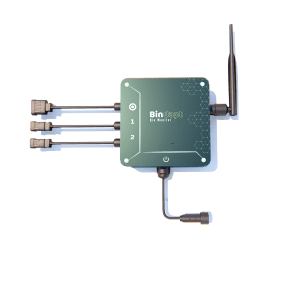
Adaptive Agriculture’s grain management system tracks bin conditions and brings the data into Visual Farm, where farmers can review information from one or several bins.
Using technology to help detect grain spoilage can support earlier, more informed decisions about aeration, drying, or further inspection before deterioration spreads.
What should you do if you suspect grain is spoiling?
Review the available temperature, moisture, CO₂, and airflow information promptly. Look for where conditions are changing, how quickly they are changing, and whether several indicators point to the same problem. Check for odors, condensation, and surface crusting from a safe location outside the bin.
Do not enter a bin to investigate suspected spoiled or bridged grain. Crusted grain can conceal unstable cavities, and flowing grain poses serious entrapment hazards.
The appropriate response depends on the crop and the severity of the problem. Aeration or drying may stabilize conditions in some cases, while actively deteriorating grain may need to be removed from storage sooner and assessed for suitability for its intended use.
Stay ahead of grain spoilage
Grain spoilage is easier to manage when changing conditions are identified before a small hot spot becomes a larger problem. Proper moisture management, even temperatures, regular monitoring, and timely action all help reduce the risk of storage losses.
To learn more about monitoring and grain conditioning options for your operation, contact us.