Keeping stored grain in good condition requires knowing what is happening inside the bin, but manual checks can take time and may not always catch problems early. Changes in grain temperature, moisture, CO₂, and airflow can signal when stored grain needs attention.
Remote grain bin monitoring gives farmers access to this information from their phone or computer. This article explains what remote monitoring measures, how it supports everyday grain management, and when physical inspections are still necessary.
What is remote grain bin monitoring?
Remote grain bin monitoring uses sensors installed in and around a bin to collect readings and send them to a digital platform. Depending on the setup, data can be transmitted over a Wi-Fi or cellular connection.
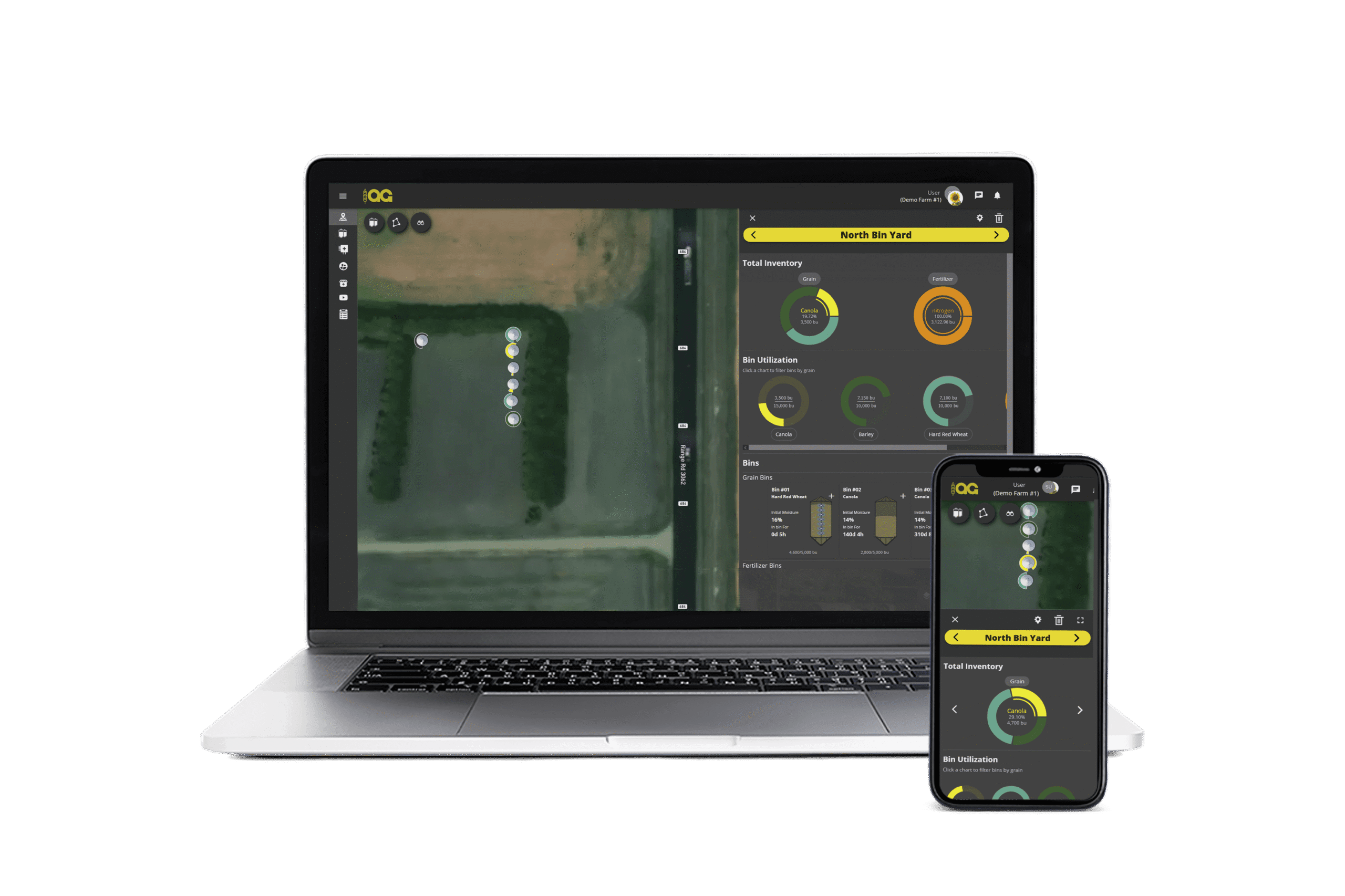
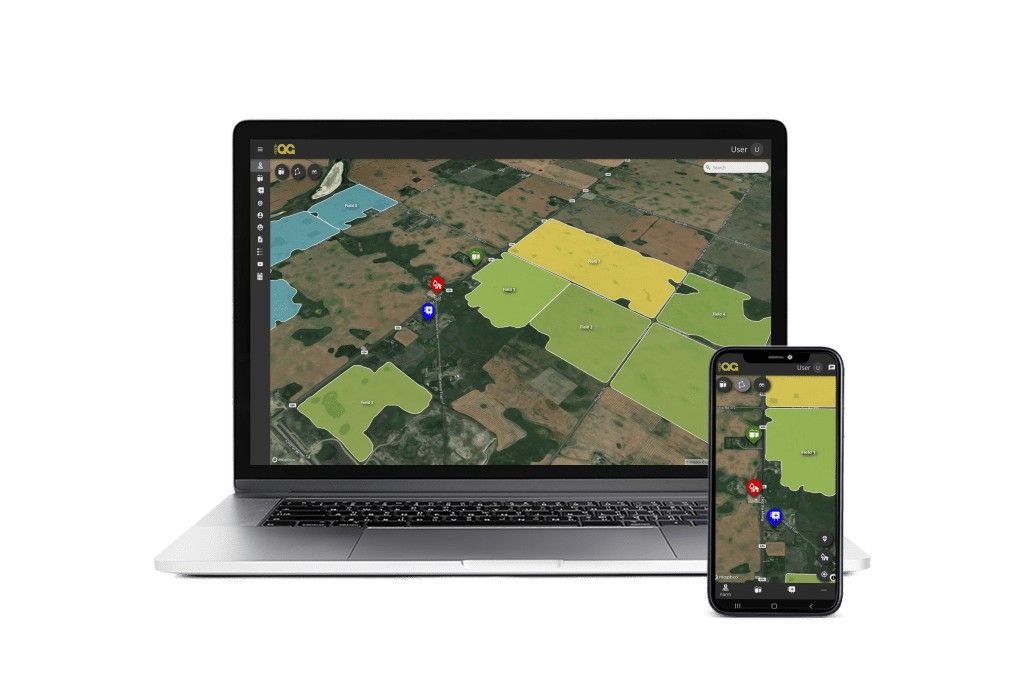
Farmers can check current conditions and historical readings without visiting the bin or taking manual measurements. They can also view readings from several bins in one place, making it easier to track conditions across the entire operation.
Which grain conditions can be monitored remotely?
With Adaptive Agriculture technology, farmers can monitor several grain and air conditions depending on the sensors installed. Here’s what each measurement can tell you.
Grain temperature
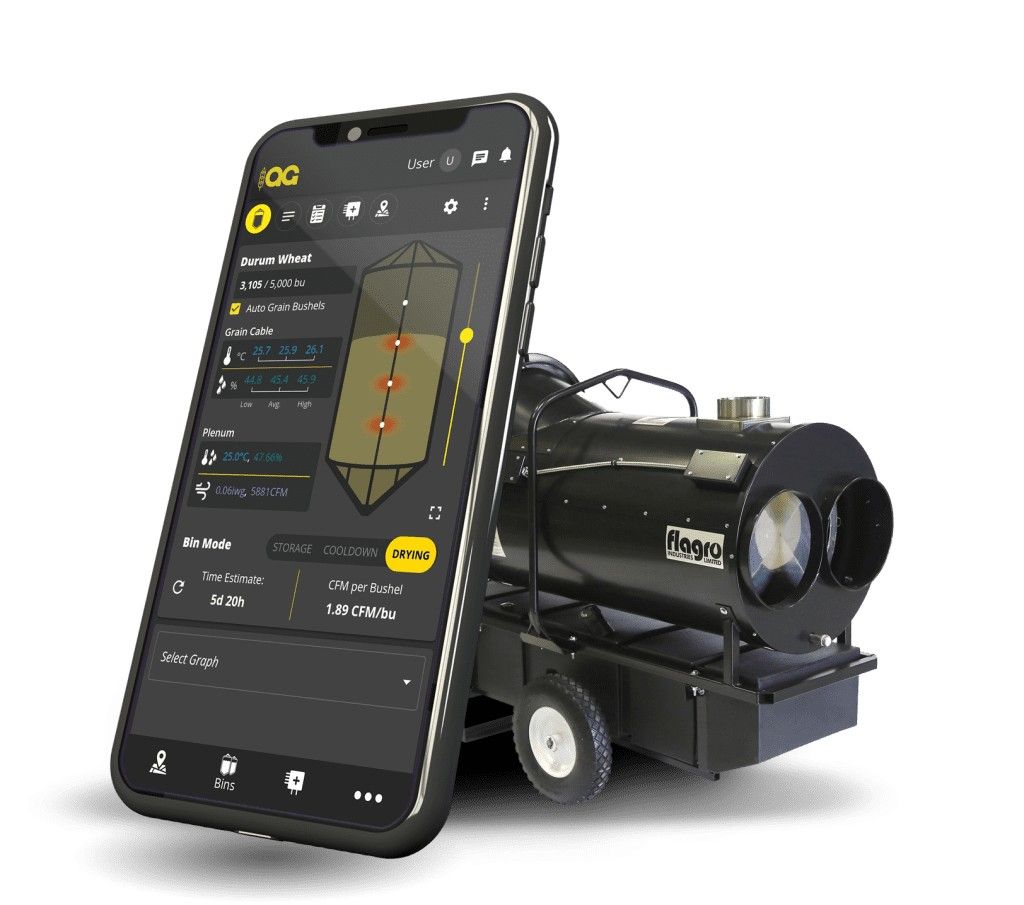
Temperature is one of the most useful indicators of stored grain condition. A rise that seasonal changes cannot explain may point to mold, insect activity, or another developing problem. Our grain bin monitoring system collects readings from in-bin temperature cables at multiple points, helping farmers identify temperature changes that a single spot check might miss.
Grain moisture
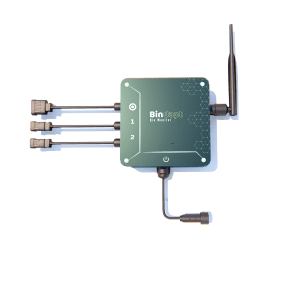
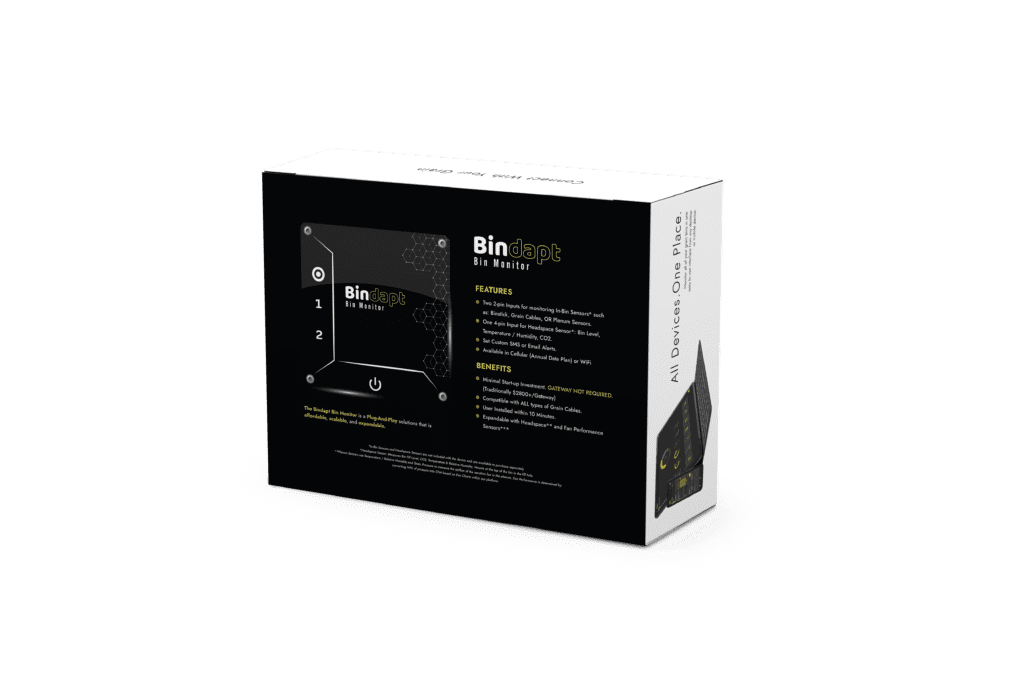
Moisture affects how safely grain can be stored and how quickly it can deteriorate. With moisture cables connected to the V2 Bindapt+ 2.0 Monitor, readings are sent to the Visual Farm platform. Farmers can track whether moisture levels remain within their target range and assess whether drying is needed.
Headspace CO2
Biological activity in stored grain produces carbon dioxide, so rising CO₂ levels can provide an early sign of changing conditions. Our headspace CO₂ sensor tracks these levels over time, helping farmers decide when the grain needs a closer look.
Ambient and plenum conditions
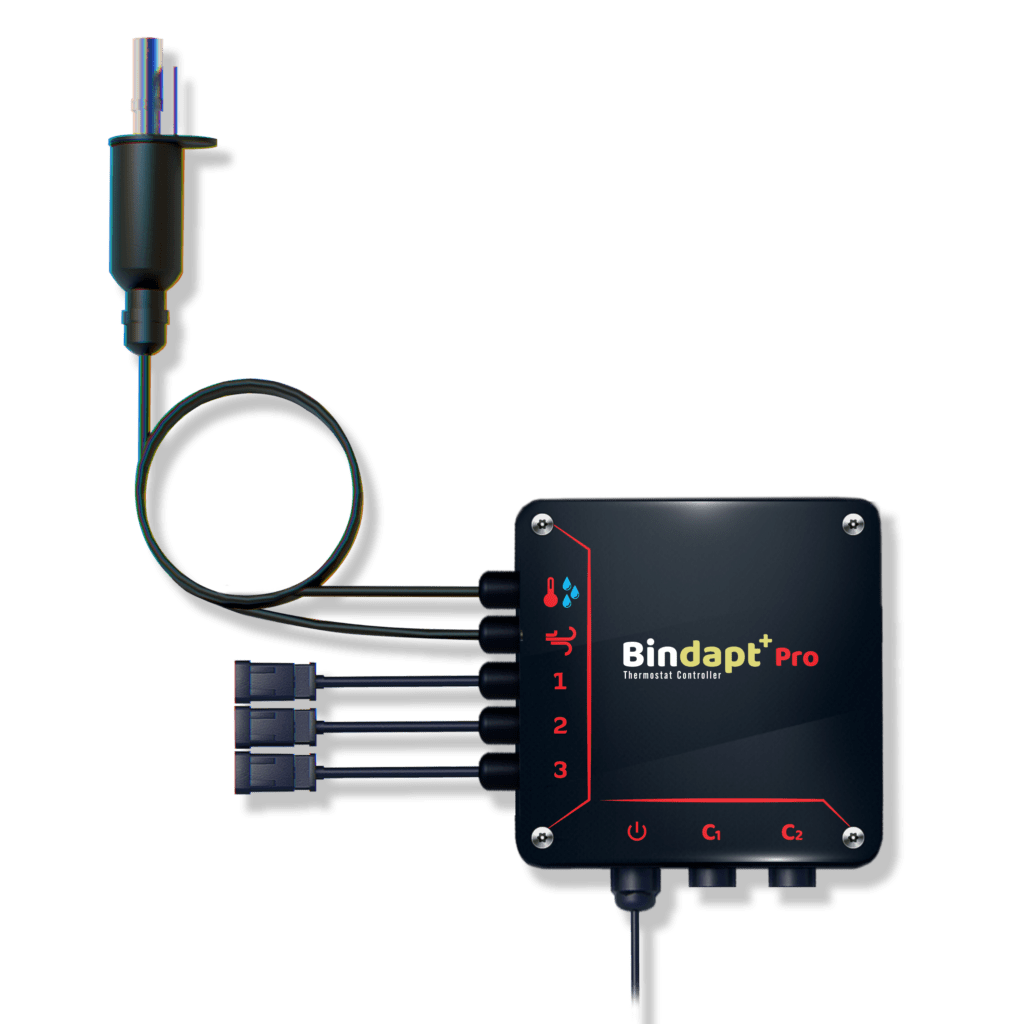
Outdoor temperature and humidity affect whether incoming air is suitable for grain conditioning. Our ambient sensor tracks outdoor conditions, while the plenum sensor measures the temperature, relative humidity, and static pressure of air moving into the bin.
Static pressure readings are also used to estimate airflow, helping farmers assess fan performance. Together, these measurements help farmers decide when and how to aerate or dry their grain.
How wireless monitoring supports everyday grain bin management
A wireless monitoring system can make day-to-day grain management more organized by providing alerts, historical readings, and shared access to bin information.
- Alerts when readings change: Readings are recorded at regular intervals, and an alert goes out by text, email, or in-app notification when a value moves outside the limits you set.
- Trends over time: A single reading may look normal, but a steady climb over several days can point to a developing issue that farmers can investigate early.
- Fewer trips into the bin yard: Farmers can prioritize physical visits based on the information available remotely, helping reduce unnecessary trips between routine checks.
- Shared access for the team: Additional users can be added to the farm account, giving everyone working with the bins access to the same information.
- Notes for each bin: Add notes to individual bins and review past storage conditions and sensor readings, giving the team a record of what has happened over time.
How remote monitoring can help reduce exposure to safety risks
Some grain bin checks involve working near moving equipment, climbing structures, or entering areas that require additional safety precautions. Remote monitoring gives farmers access to sensor readings from outside the bin, reducing the need to visit the site for every reading.
This can help farmers focus physical visits on tasks that require closer attention, such as inspecting equipment, investigating unusual readings, or carrying out maintenance.
Remote monitoring can support safer grain management, but it does not replace physical inspections or established grain bin safety procedures.
Final thoughts
Remote monitoring gives farmers a clearer view of stored grain between physical visits and brings key bin information into one place. With the right sensors and setup, it can help farmers identify changes and make more informed grain management decisions.
The right setup depends on how you store grain and manage your bins. To discuss your needs, contact us. Our team will help you find a setup that suits your operation.
Frequently asked questions