Proper moisture management is essential for protecting grain quality during storage. If grain is stored at moisture levels that are too high, it becomes harder to manage and faces a greater risk of spoilage and other quality issues. Setting an appropriate moisture target before storage provides a clear benchmark for preparing grain for safe storage.
Recommended moisture targets vary by crop and how long you plan to store it. This guide outlines commonly used moisture levels for major grain and oilseed crops, along with key considerations for maintaining suitable conditions throughout storage.
Which factors affect grain storage moisture targets?
Several factors influence the moisture level considered suitable for safe grain storage:
- Crop type: Crops have different moisture tolerances based on their physical and chemical characteristics.
- Grain temperature: Higher temperatures can shorten the safe storage period, while cooler conditions generally help preserve grain quality.
- Storage period: Grain intended for longer storage typically requires a lower moisture level.
- Grain condition: Fines, broken kernels, and damaged grain can restrict airflow and increase the risk of moisture-related problems.
- Moisture distribution: Moisture may not be evenly distributed throughout a bin. Localized wet areas can pose a risk even when the overall moisture reading appears acceptable.
Recommended grain storage moisture levels by crop
The grain storage moisture chart below lists commonly recommended maximum moisture levels for clean, good-quality grain in aerated storage.
Crop | Up to 6 months (winter) | 6 to 12 months (into summer) | Over 1 year |
Corn and grain sorghum | 15% | 13% | 13% |
Soybeans | 13% | 12% | 11% |
Wheat and barley | 14% | 13% | 12% |
Oil sunflower | 10% | 8% | 8% |
Canola | 9% | 8% | 8% |
These figures reflect commonly cited grain storage recommendations published by Purdue Extension in September 2025. Actual storage conditions also matter, particularly grain temperature and condition. Buyers and contracts may specify their own moisture limits, so confirm those requirements before binning.
What happens when grain is stored too wet or too dry?
Storing grain too wet or too dry can affect its quality and value:
- Too wet: Excess moisture can encourage mold, heating, insect activity, and spoilage. Moisture moving within the bin can also cause condensation, crusting, clumping, and wet spots.
- Too dry: Overdrying increases energy costs, reduces saleable weight, and makes kernels more likely to crack or break during handling.
If grain enters storage too wet, an appropriate in-bin drying system can help bring it down to the recommended moisture level. For more information, see our guides on moisture migration in stored corn and spoilage at the top center of a bin.
The goal is to reach an appropriate moisture target for the crop and intended storage period without drying the grain more than necessary.
Why ongoing monitoring is important
Regular monitoring confirms that grain stays within its target moisture level throughout storage. Useful methods for monitoring stored grain include:
- Manual sampling: Periodically checking grain with a moisture meter provides a direct moisture reading from the sampled grain.
- In-bin cables: Track grain temperature and moisture at multiple points throughout the bin.
- Plenum sensors: Measure temperature, humidity, and static pressure to help assess the air being used to condition stored grain.
- Headspace CO₂ sensors: Monitoring CO₂ levels in the bin headspace can provide an early indication of biological activity associated with grain deterioration
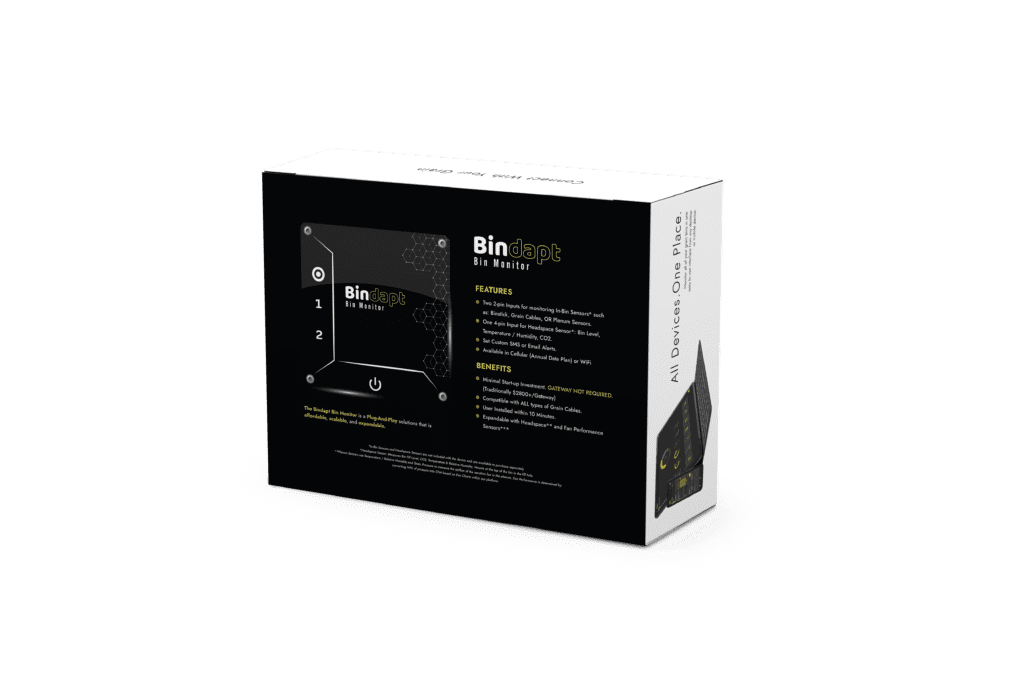
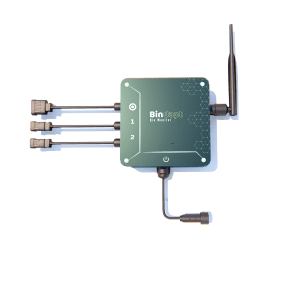
A monitoring device, such as Bindapt+ 2.0, can connect to in-bin grain cables and compatible sensors to monitor grain temperature, moisture, and other bin conditions.
A grain management platform such as Visual Farm can then give you one place to view conditions across all your bins and receive text, email, or in-app alerts when something needs attention.
Setting the right moisture target
Choosing an appropriate moisture target is an important first step, but maintaining grain quality requires ongoing attention. Conditions inside a bin can change throughout the storage season as temperature, humidity, airflow, and grain condition shift. Regular checks and continuous monitoring can help identify changes early and support timely action.
Adaptive Agriculture provides monitoring and automation solutions that work with existing bin cables, helping growers track moisture and temperature conditions and receive alerts when attention is needed. Contact us to learn more.
Frequently asked questions
Safe moisture levels depend on the crop and how long the grain will be stored. Longer storage periods and warmer conditions require lower moisture levels.
Corn stored through winter should be kept at or below 15% moisture. For storage into summer or longer, the recommended target drops to 13%.
For wheat and barley, recommended moisture levels decrease with storage duration: 14% through winter, 13% into summer, and 12% for storage beyond one year.
Yes. Grain can gain or lose moisture during storage as it interacts with the surrounding air. Changes in temperature, humidity, and aeration can affect grain moisture over time, so moisture levels should be monitored throughout storage.
Check grain moisture when the seasons change, such as from fall to winter and from spring to summer, and more frequently when bin temperatures fluctuate.