How long grain can be stored depends mainly on two factors: moisture content and grain temperature. Dry, cool corn can stay in good condition for many months, while wetter corn stored at warmer fall temperatures can begin losing quality in a matter of days or weeks.
Farmers use allowable storage time to estimate how long grain can be stored before its quality begins to decline. The type of crop, the condition of the grain, and how well the storage bin is managed can also affect how long the grain will keep.
What is allowable storage time?
Allowable storage time is the estimated number of days grain can remain at a certain moisture level and temperature before quality loss is expected. As grain uses up that time, the risk of heating, mold, off odors, and grade loss increases.
These estimates can guide your decisions, but they aren’t a guarantee. Grain with cracked kernels, excessive fines, or weed seeds may deteriorate sooner than clean, undamaged grain stored at the same moisture content and temperature.
What factors affect how long grain can be stored?
Moisture content
Grain stored too wet is more likely to develop heating, mold, and other quality problems. Each crop has its own storage moisture target, and you may need to dry grain before storing it long term. In general, lower moisture gives you more storage time, especially when you also keep the grain cool.
Storage temperature
Temperature directly affects how quickly grain deteriorates. Cooler temperatures slow biological activity, including mold growth and insect activity. Warm grain uses up its allowable storage time much faster, particularly when moisture is high. Aerating grain to cool it after drying can help extend its storage life.
Grain condition
The condition of grain going into the bin matters, too. Damaged kernels, fines, and foreign material can contribute to pockets of heat and moisture. Cleaning grain before storage and maintaining even airflow can help reduce these risks.
Insect activity
Insects can damage grain and generate heat, reducing quality, especially when grain remains warm. Keeping bins and equipment clean, monitoring grain temperature, and addressing insects early can prevent a small problem from becoming a bigger one.
Storage equipment and bin condition
Your storage system affects how well you can manage moisture and temperature. A well-maintained bin helps keep moisture out and supports effective aeration and monitoring. Drying equipment, aeration fans, temperature cables, and remote monitoring tools can help manage conditions throughout the storage season.
Allowable storage time charts for corn and soybeans
Corn and cereal grains
The chart below shows the approximate number of days cereal grains such as corn can be stored at different moisture levels and temperatures before quality loss is expected.
Moisture | 40°F | 50°F | 60°F | 70°F | 80°F |
14% | Over 300 days | Over 300 days | Over 300 days | 200 days | 140 days |
15% | Over 300 days | Over 300 days | 240 days | 125 days | 70 days |
16% | Over 300 days | 230 days | 120 days | 70 days | 40 days |
17% | 280 days | 130 days | 75 days | 45 days | 20 days |
18% | 200 days | 90 days | 50 days | 30 days | 15 days |
20% | 90 days | 50 days | 25 days | 14 days | 7 days |
24% | 40 days | 15 days | 10 days | 6 days | 2 days |
Soybeans
Soybeans have a separate storage table because their allowable storage time is shorter than that of cereal grains at the same moisture level and temperature.
Moisture | 40°F | 50°F | 60°F | 70°F | 80°F |
12% | Over 300 days | Over 300 days | 240 days | 125 days | 70 days |
13% | Over 300 days | 230 days | 120 days | 70 days | 40 days |
14% | 280 days | 130 days | 75 days | 45 days | 20 days |
15% | 200 days | 90 days | 50 days | 30 days | 15 days |
16% | 140 days | 70 days | 35 days | 20 days | 10 days |
17% | 90 days | 50 days | 25 days | 14 days | 7 days |
As the charts show, soybeans need to be about three percentage points lower in moisture than cereal grains to have the same estimated storage life at a given temperature. For example, soybeans at 14% moisture have roughly the same allowable storage time as corn at 17%.
Understanding cumulative storage time
Allowable storage time is cumulative, which means cooling grain later slows further deterioration, but it does not restore storage life already used.
For example, soybeans at 16% moisture have an estimated storage life of 70 days at 50°F. If they spend 35 days at that temperature, they’ve used about half of their allowable storage life. If they are then cooled to 40°F, only half of the 140-day allowance at the cooler temperature remains, so about 70 more days.
How to make the most of your grain’s storage life
Dry grain to match your marketing plan
The drier the grain, the longer it can be stored. But how dry it needs to be depends on when you plan to sell it. For example, common storage guidelines for corn recommend about 15% moisture for grain sold by spring, 14% for storage of 6 to 12 months, and 13% for storage of a year or longer.
Drying beyond what your marketing plan requires can increase energy costs and reduce saleable weight.
Cool grain in stages with aeration
Temperature control is vital for grain storage, as even dry grain can develop problems if it stays too warm. As fall temperatures drop, run aeration fans when grain is about 10 to 15°F warmer than the average outdoor temperature. Common winter targets are 20 to 30°F in northern states and below 40°F in warmer regions.
Let each cooling cycle move completely through the bin. Stopping early can leave a warm layer where condensation and mold may develop.
Monitor conditions inside the bin
Conditions can change throughout grain storage. Temperature and moisture sensing cables track conditions at multiple depths, helping identify problems early and reducing manual bin checks.
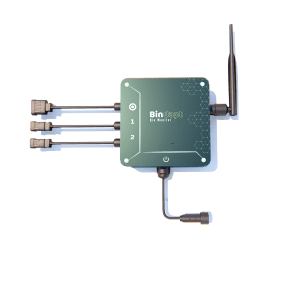
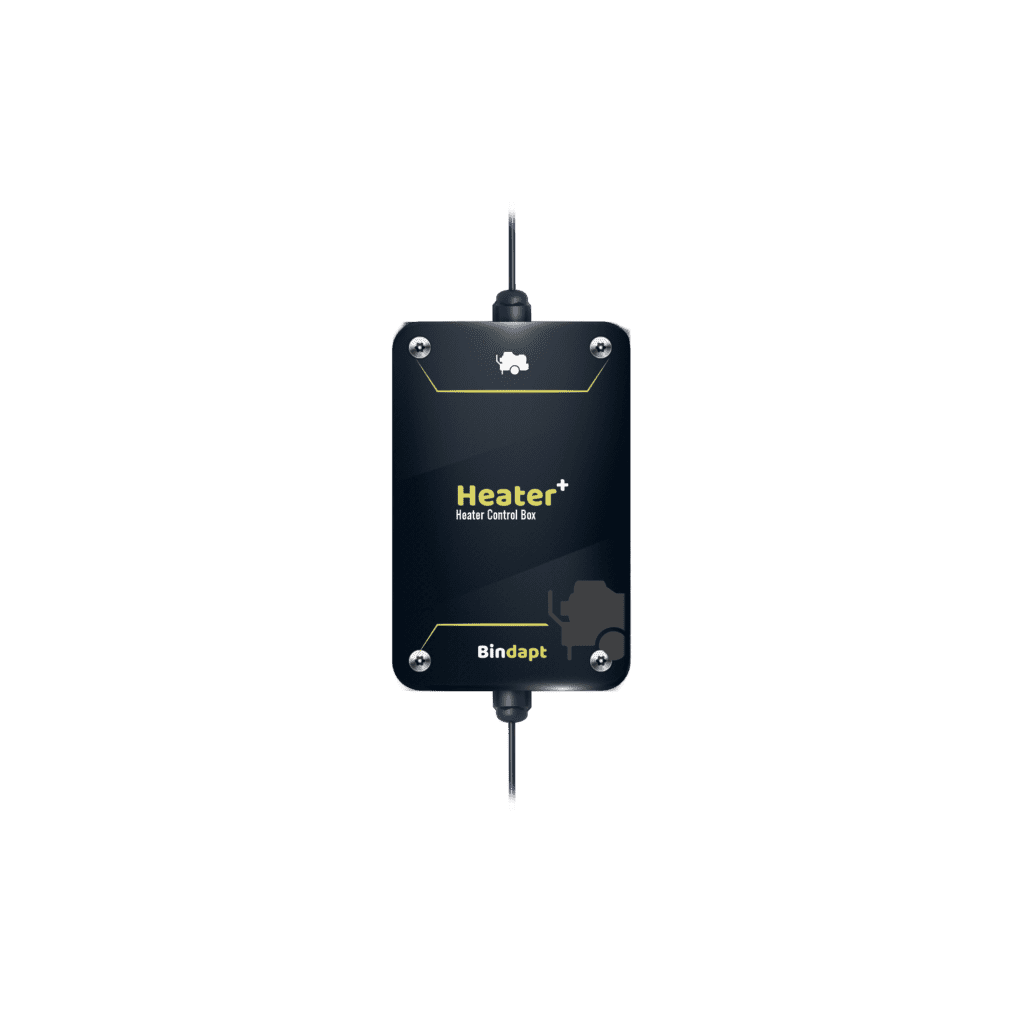
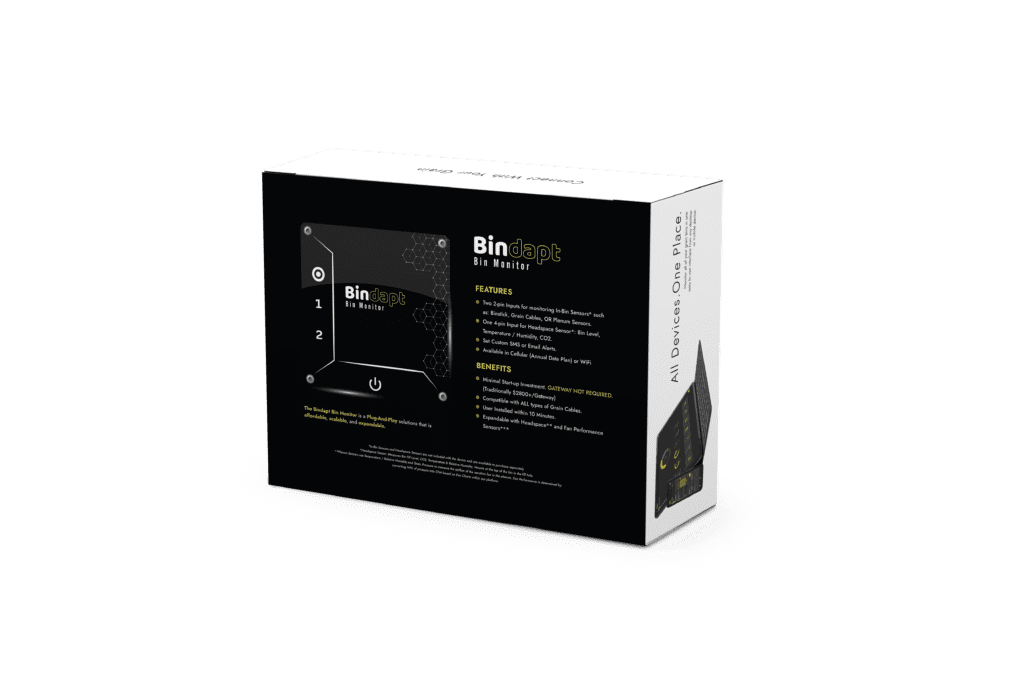
Our V2 Bindapt+ 2.0 Monitor is an advanced grain storage temperature and moisture monitoring system that reads OPI and Bin-Sense grain cables and sends alerts when conditions change. The V2 Bindapt+ 2.0 Automate adds automated fan, heater, and equipment control.
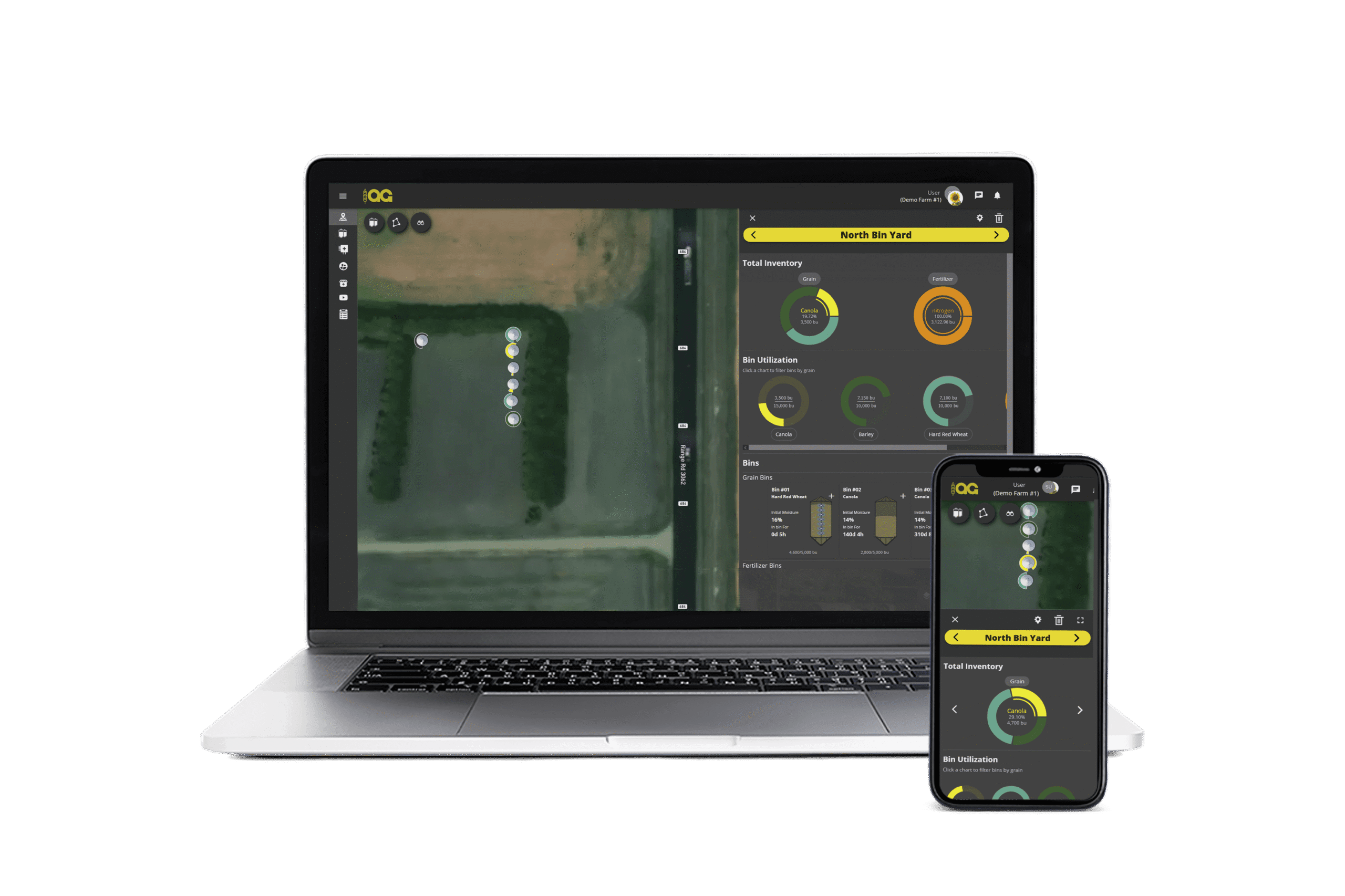
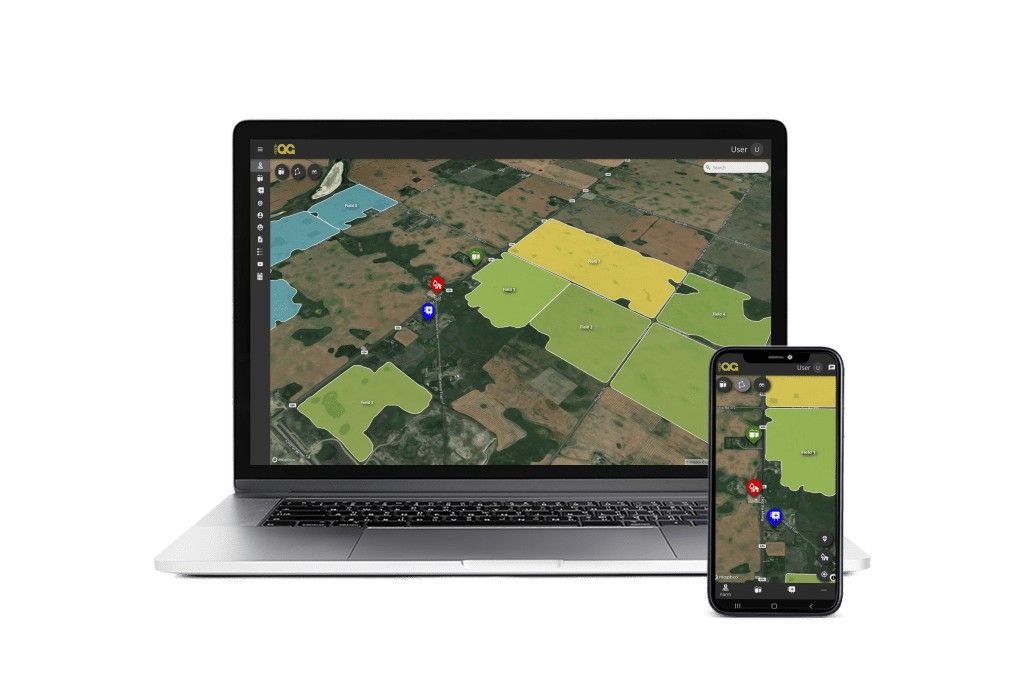
Both integrate with our Visual Farm platform, giving you one place to monitor bin conditions, view trends and alerts, and manage your grain storage system.
Warning signs to watch for
Even if your grain is still within its estimated storage time, watch for signs that its condition may be declining:
- Temperatures that continue to rise or isolated hot spots.
- Damp or crusted grain on the surface.
- Musty or sour odors near the hatch or fan exhaust.
- Rising CO₂ levels, if you monitor for them.
If you notice any of these signs, review your monitoring data and assess the problem. Let the grain’s actual condition guide your next step. You may need to aerate or dry it, address a problem area, or move it out of storage sooner than planned.
Protect your grain’s quality throughout storage
Allowable storage time is a useful planning tool, but your grain’s actual condition should also guide your decisions. Managing moisture, keeping grain cool, and monitoring for changes can help protect quality until you’re ready to sell.
Adaptive Agriculture’s grain management solutions can help you keep track of bin conditions and manage your storage system with monitoring and automation tools. Contact our team in Sioux Falls, South Dakota, to find the right setup for your operation.
Frequently asked questions